March 31, 2026
.jpg)

Birth control, also known as contraception, is the use of any method, medication, device, or surgery to help prevent pregnancy.

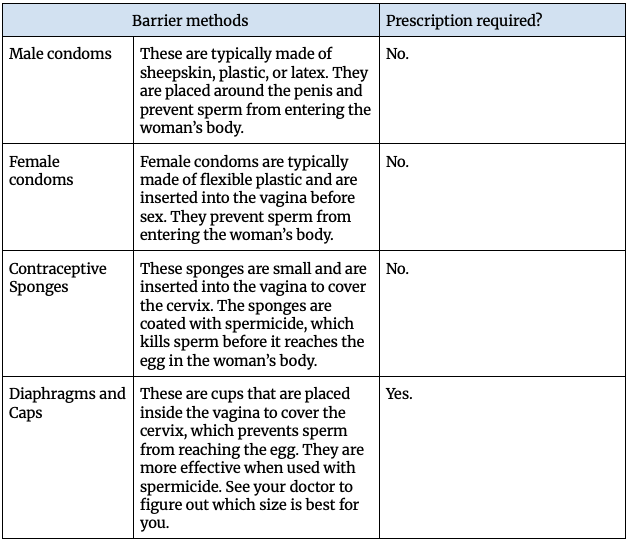

Some methods of birth control are more effective at preventing pregnancy than others. The chart below, provided by the American College of Obstetricians and Gynecologists, ranks the efficacy of different birth control methods. You can find a Spanish version of the chart following the link here or in the references below.

While most forms of birth control are generally safe, you may experience some side effects. The type of side effects you might experience depends on which method of birth control is being used. For example, some side effects of copper IUDs include irregular periods, pain when your IUD is put in, and cramps. Birth control that contains estrogen, for example, can cause side effects such as weight gain, nausea, breast tenderness, or even rare side effects such as blood clots, heart attack, and stroke. However, the risk of these rare side effects is generally lower than the risk of these complications during pregnancy.
Not all methods of birth control protect against sexually transmitted diseases. Birth control methods such as the pill, patch, ring, IUD, injection, and some others do not protect against STDs. Other methods, such as condoms, can help prevent STDs but are not 100% effective. The only method that is 100% effective at preventing STDs is abstinence (not having vaginal, anal, or oral sex).
Emergency contraception is a method of birth control that is used to prevent pregnancy after unprotected sex (meaning no birth control method was used at the time of sex) or if the birth control method failed, such as a condom breaking during sex. There are two options available for use as emergency contraception:
Please note that emergency contraception is not meant to be used as a regular form of birth control.
There are many birth control options available, and together with a healthcare provider, you can find the best one for you.
This article is for informational purposes only and should not be substituted for professional medical advice, diagnosis, or treatment. Information is subject to change. Consult your healthcare provider for guidance on medical issues and before starting, changing, or terminating any medical treatment.
References
At Health Matters Clinic, we believe prevention starts with access. Our community health events offer free screenings, wellness resources, and support — because everyone deserves the chance to catch health issues early.
Here's how you can take action:
Together, we can build healthier communities — one step at a time.