August 12, 2026
.jpg)

We often hear phrases like “boys don’t cry” on TV, on social media, at school, and sometimes even at home. While these words may seem harmless, such dismissive messages can make it harder for men to ask for support when they need it.
Mental health affects everyone, including men. Yet many men feel pressure to appear strong, handle challenges on their own, or avoid talking about emotional struggles. This can make it more difficult to reach out for help.
In 2024, the suicide rate for men was nearly 4 times higher than the rate among women. Yet men are less likely than women to seek help for mental health. Common reasons include fear of being judged as less masculine, worrying that asking for help may be seen as a sign of weakness, and fearing negative judgment from peers, family, and society.
But asking for help is not a weakness. It’s a sign of self-awareness.
Mental health challenges are common, treatable, and nothing to be ashamed of.
If you notice any of the following in yourself or someone you care about, consider reaching out for professional help:
You do not have to wait until something feels seriously wrong to ask for help. Support and resources are available.
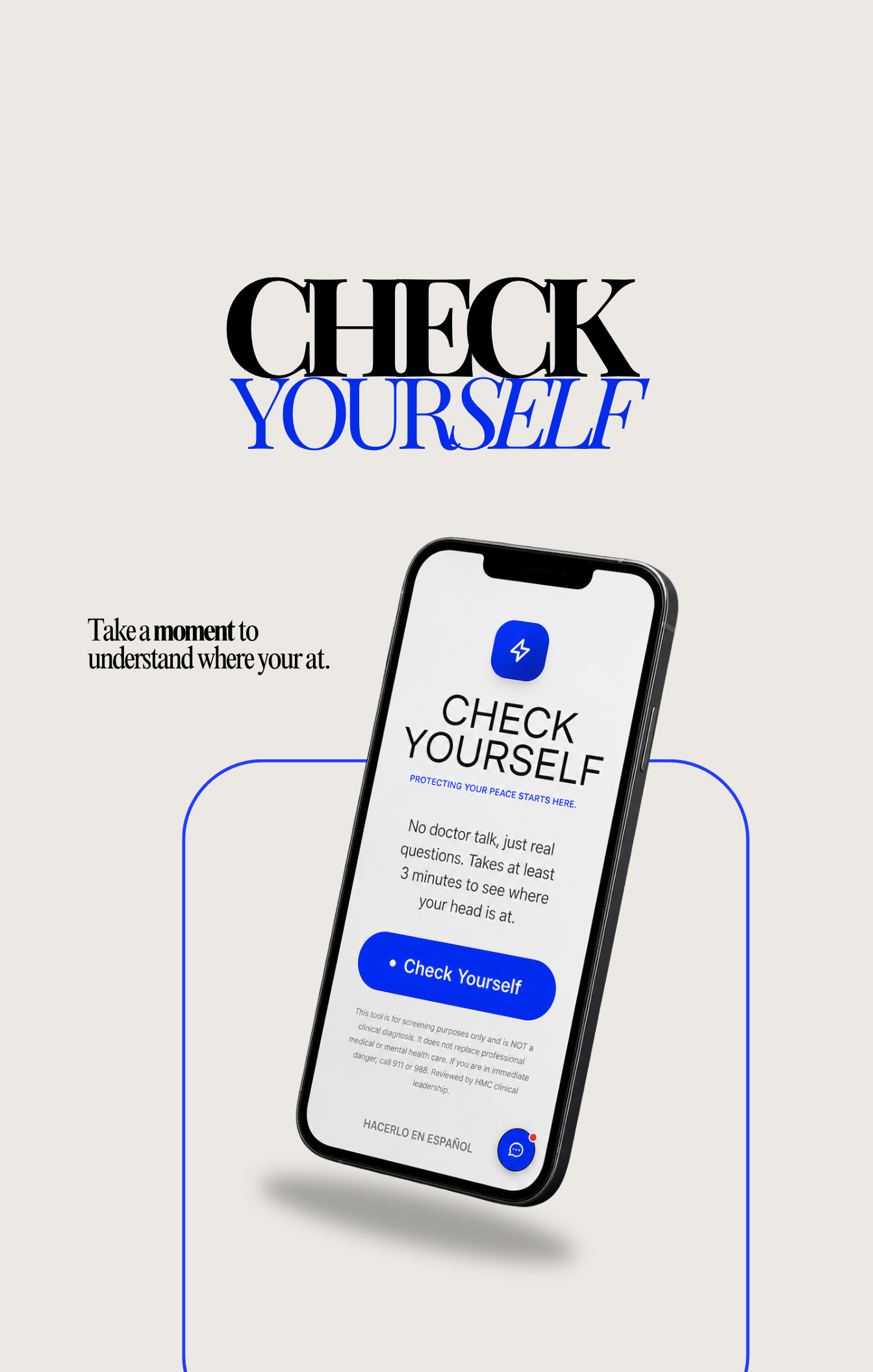
Check Yourself Tool: The Check Yourself tool helps you check in on your mental health and create a personalized plan to support your well-being. You can also learn about our free resources, including wellness workshops, calming techniques, and ways to connect for additional help. Click here for the Check Yourself tool.
Event Finder: Our Event Finder helps you locate free health resources and community events near you. We host events such as our UNSTOPPABLE workshops, which provide free information on topics like self-care, health, and wellness. Click here to find an event near you.
Resource Directory: Looking for additional support? Our Resource Directory includes information about local organizations and community partners that offer help with:
Click here for our Resource Directory.
Need immediate help? If you or someone you know is struggling or in crisis, contact the 988 Suicide and Crisis Lifeline by calling or texting 988 or chat online at 988lifeline.org. This service is free, confidential, and available 24/7.
Just as it’s normal to feel happiness, excitement, or joy, it’s also normal to experience things like sadness, stress, or worry. These feelings are part of being human and are nothing to be ashamed of.
You do not have to manage difficult feelings alone. Support is available, and reaching out can make a difference.
Talk with a healthcare professional to learn more about available resources and support options.
Your mental health matters to us, and together, we can be unstoppable!
MEDICAL DISCLAIMER: The content provided is for informational and educational purposes only and does not constitute medical advice. It is not a substitute for professional medical advice, diagnosis, or treatment. Reading or use of this information does not create a doctor-patient relationship. While we strive to provide accurate and up-to-date information, we make no representations or warranties of any kind, express or implied, about the completeness, accuracy, reliability, suitability, or availability of the information provided. Information is subject to change. Users engage with the content provided at their own risk. The publishers, contributors, authors, or affiliates shall not be held liable for any consequences arising from the use of information provided. Always consult your healthcare provider for guidance on your specific medical needs and before starting, changing, or stopping any medical treatment. If you think you may have a medical emergency, call 911 or your doctor immediately.